Executive Summary: A New Toolkit for Recruitment
Admissions offices are competing for students who have never known a world without a screen in their hand, and who decide within seconds whether a piece of outreach is worth their time. Extended Reality (XR) has become one of the few tools that reliably holds that attention long enough to say something meaningful about a campus.
What changed in 2026 is not the technology itself but how easily it deploys. A single 3D model of your quad can now be published as a browser-based virtual tour, launched in AR from a QR code on an acceptance mailer, and projected on a holographic display at a college fair. One asset, several channels, no separate production budget for each. For a recruitment team working against a fixed calendar and a fixed spend, that shift matters more than any individual headset or platform.
The results are measurable at each stage of the funnel. Georgia Tech reported a 28% increase in international enrollment after launching a virtual tour. The University of Hartford's Barney School saw freshman deposits rise 70% against the university average in the two weeks following an immersive mailer campaign. SCAD's AR course catalog and personalized acceptance videos preceded a 26% increase in applications.
These outcomes are not accidents of novelty. Prospective students in this cohort treat what they consume as a statement about who they are, and they read a school's choice of technology as a signal about the school. Meeting them in a format they already use every day is a recruitment decision before it is a technology decision.
This paper covers what each XR format does, where the evidence is strongest, and how institutions of any size and budget have put these tools to work.
Key Benefits of XR for Institutions and Brands
Enhanced Engagement & Retention
Interactive XR content extends user engagement 2x longer than traditional digital media, improving brand recall.
Frictionless Access
Browser-based 3D and Mobile AR enable instant, app-free immersive experiences, eliminating installation barriers.
Multi-Platform Scalability
XR solutions now work seamlessly across mobile, desktop, VR headsets, and holographic displays, maximizing reach.
Cost-Effective & Accessible
VR headsets and holographic displays are becoming far more affordable, and Mobile AR / browser-based 3D require no specialized hardware at all.
Measurable ROI
AR-driven experiences boost engagement by 94% and increase conversion rates by up to 70%.
Expanding Market Growth
Industry forecasts predict XR spending will rise from $44.7 billion in 2024 to $299.3 billion by 2030, building on early proof points like the U.S. Army's initial $480 million contract to adapt HoloLens hardware in 2018.
What is XR, and Why Should You Care?
XR technology has exploded in recent years, going from what many considered to be a niche novelty to an engaging and invaluable tool. It is very likely that you have interacted with XR in the past month, and likely even today. As immersive technology continues to evolve, understanding the core concepts of XR is essential.
XR is an umbrella term encompassing Virtual Reality (VR), Augmented Reality (AR), browser-based 3D, and Holograms. While not technically a form of XR, its spiritual cousin AI is a rapidly growing technology that will play an increasingly bigger role in unifying the different elements of XR. When combined, these elements create seamless and scalable digital experiences. The table below defines these key terms, provides real-world examples, and highlights their higher education applications.
| Term | Definition | Example | Higher Ed Use Cases |
|---|---|---|---|
| Extended Reality (XR) | An umbrella term that includes both VR and AR, often used interchangeably with "Mixed Reality." | All of the below | All of the below |
| Virtual Reality (VR) | A fully immersive digital experience where all visual input is computer-generated. | Oculus Quest, Beat Saber, Apple Vision Pro | Virtual Campus Tours, Virtual Events |
| Augmented Reality (AR) | A layering of digital elements on top of the real, physical world. | Pokémon GO, Snapchat filters, digital try-ons | Interactive Business Cards, Posters & Signage, Stickers, AR Tours |
| Browser-Based 3D | Interactive 3D content that runs directly in a web browser via WebXR, without an app, download, or additional software. | Mozilla Hubs, Google Model Viewer, 8th Wall | 3D Campus Maps, Interactive Microsites, Web-Based Interactive Experiences |
| Holograms | 3D visual representations that appear to exist in real-world space, viewable without a headset. | ABBA Voyage, Museum Displays, Holographic Fans, Looking Glass Displays | Interactive Recruitment Displays, Dancing Mascots, Building/Space Visualizations |
| Artificial Intelligence (AI) | Machine learning models that analyze data, automate interactions, and enhance personalization. | ChatGPT, Claude, AI-Powered Chatbots | AI-Driven Virtual Assistants, Personalized Admissions Chatbots, Smart Campus Navigation |
By integrating XR technologies like browser-based 3D, VR, AR, and holograms, institutions and brands can leverage these experiences together, creating engaging, scalable, and highly personalized digital experiences. Colleges and universities across the globe have begun to recognize the potential of XR technology for their marketing, outreach, and recruitment.
The Science Behind AR
Anyone who's used XR can attest that it is fun and exciting, but apart from being a novelty, what is the actual impact of XR? Numerous studies have shown that XR actually engages our brain differently than standard media in areas such as attention, memory, and emotional engagement.
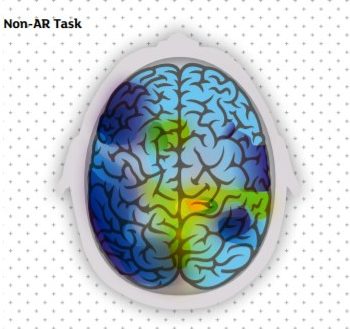
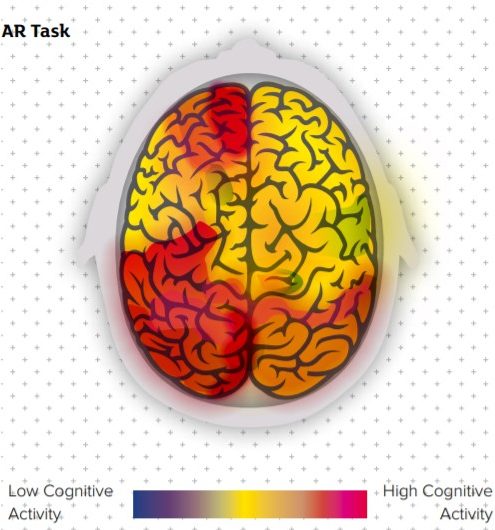
Image Credit: "How Augmented Reality Affects the Brain," Zappar, May 24, 2018
More recent neuromarketing research backs up the same pattern. A 2025 study in Behavioral Sciences found that immersive AR content increases alpha and theta brainwave activity, markers tied to cognitive processing and working memory, compared to static content, adding controlled experimental data to what the earlier industry studies observed.
AR has also been found to activate long-term memory over short-term memory. Memories created by engaging with AR content last significantly longer than those created by standard marketing tactics. AR is more effective at grabbing a viewer's attention, is better able to capitalize on that attention by more effectively encoding the experience into memory, and remains with a viewer longer through long-term encoding.
AR also makes a marketing campaign more likely to generate emotional responses, engaging nearly double the activity levels in the brain associated with emotional intensity. As world-renowned marketing expert and professor Byron Sharp notes in his acclaimed book How Brands Grow, the majority of purchasing decisions are made with the emotional brain: 95% of consumer decisions take place unconsciously.
"Essentially, we need to start thinking that every cereal box is a TV that can launch personalized experiences: a game for kids, or interactive information for an adult." Adam Hammonds, AR/VR Commercialization Strategy Manager at Google
Many major brands have taken notice. Retail giants like Amazon, Target, Nike, and Sephora have incorporated AR tools that allow customers to try out products virtually at home.
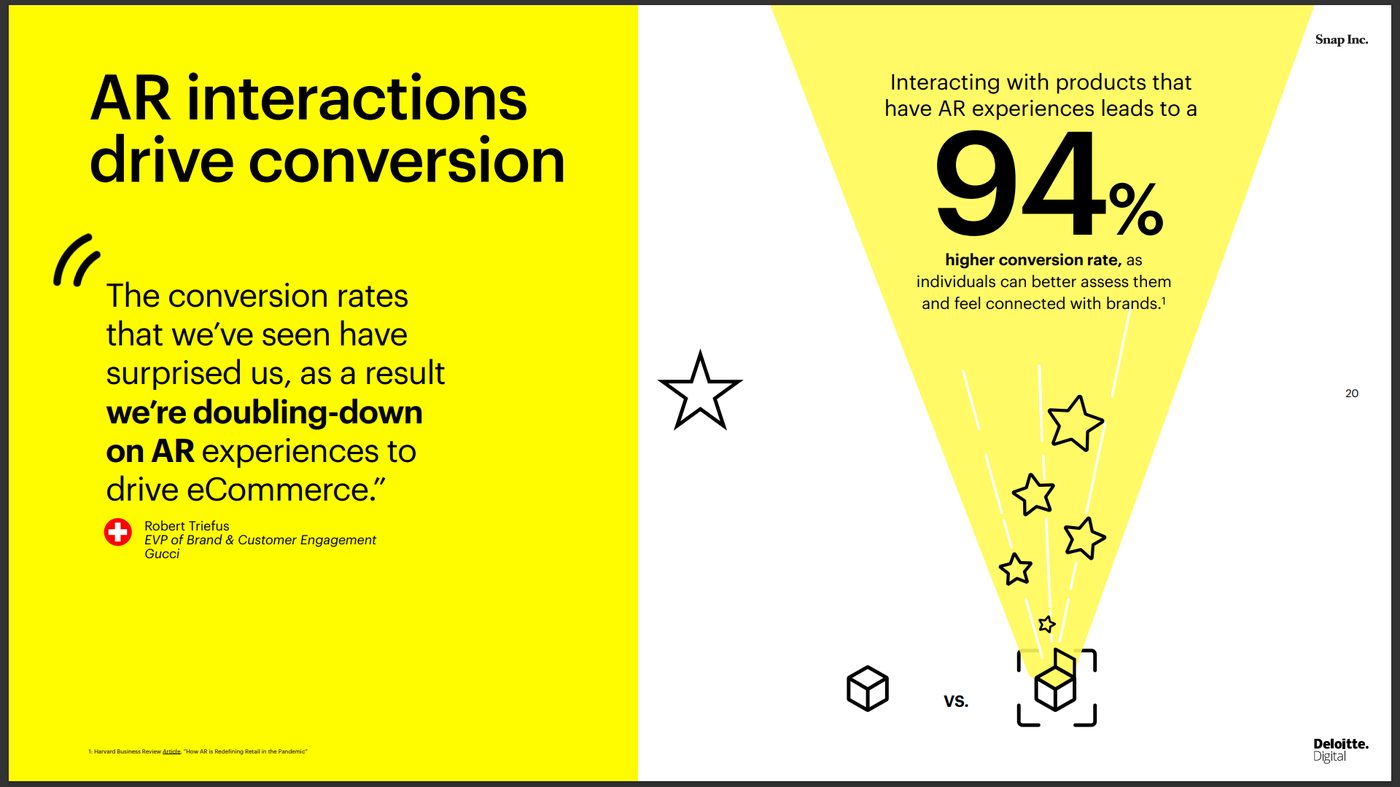
In a landscape where today’s audiences have increasingly short attention spans, AR's ability to hold focus for minutes at a time represents a powerful opportunity for marketing, education, and any message competing for time and relevance. The adoption of XR technology can also indicate to prospective students a university's commitment to environmental sustainability: AR business cards or stickers consolidate extensive pamphlet content into a compact, interactive format, markedly reducing material waste, while giving schools trackable analytics that feed into CRM systems.
XR and Today’s Students
Today’s college-bound students represent a highly connected and digitally engaged audience, with millions of prospective students in the United States and around the world actively exploring their higher education options. They are accustomed to communicating across a wide range of digital mediums, enjoy innovative forms of outreach, and respond to visual and interactive content. Having grown up surrounded by technology, XR provides a cutting-edge tool for capturing attention and helping prospective students form a stronger connection with a school.
Research from McKinsey found that younger consumers increasingly view consumption as "access rather than possession." These audiences often see their choices, from the products they purchase to the schools they attend, as expressions of individual identity. More recent research shows the same pattern continuing: Deloitte's 2025 research on younger consumers found that rising financial self-reliance is pushing them to be increasingly deliberate about what their choices communicate. With a strong focus on individual expression, feeling represented by and excited about a school can have a significant impact on prospective students' application and enrollment decisions.
65% of people aged 18 to 29 say they use Snapchat, and 71% say they use Instagram, platforms whose AR lenses (filters) are perhaps the best-known example of widely popular XR technology. To not only be competitive with other schools, but also with the sea of other content on the internet, university admissions offices need a way to draw students into visualizing life at their school. XR demonstrates that a school is engaged with new technologies and in touch with student interests, wants, and goals.
How to Incorporate XR into Your School's Outreach
Colleges, universities, and even some high schools have already found countless ways to utilize XR throughout the entire enrollment funnel, from AR-enabled mailers, to virtual tours, to virtual receptions for accepted students, and yes, even to holograms.
Virtual Tours (VR-Compatible)
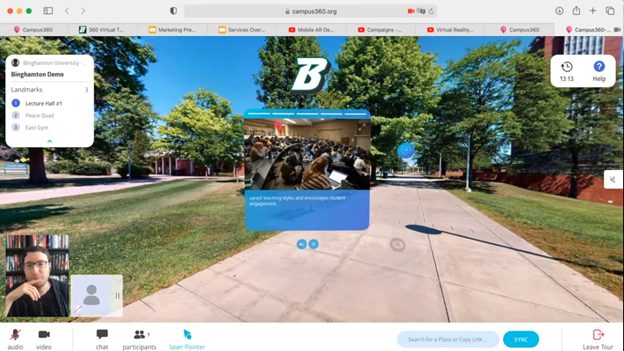
One common first step for schools looking to incorporate VR is the creation of a virtual tour. A virtual tour uses 360° images and/or videos, often combined with locational arrows to direct students between locations, giving students the sense of "walking" from location to location on campus. 360° images allow students to independently control where they are looking during a tour stop, giving them the chance to explore a campus with far greater depth, immersivity, and freedom than a video tour. The same tour can typically be viewed flat on a browser or fully immersively in a VR headset, so the format scales to whatever hardware a visitor has on hand.
Virtual tours have become an essential part of the university search process. A study by college search platform Cappex found that a large subset of students chose virtual tours as their preferred tool for initially evaluating campuses, with 30% calling it a "must have," and an additional 36% saying they "really like it," being available. Virtual tours have been shown to drive enrollment, with the Georgia Institute of Technology reporting a 28% increase in international enrollment after implementing a virtual tour.
The University of Hartford's Barney School of Business mailed university-branded Google Cardboard headsets to all accepted students so they could view the campus completely immersively. They saw a staggering 70% increase in freshman deposits for the Barney School compared to the university as a whole during the two-week period following the campaign, along with a 56% follow-up email open rate and a Facebook post that reached 32,146 people.
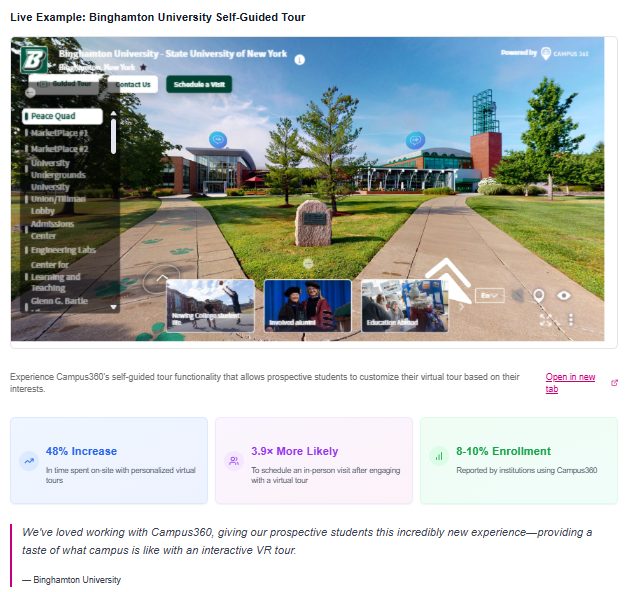
Virtual tours are no longer a nice-to-have for university marketing. They are an essential tool in the kit, and a properly executed virtual tour can boost both applications and matriculations dramatically.
AR Marketing
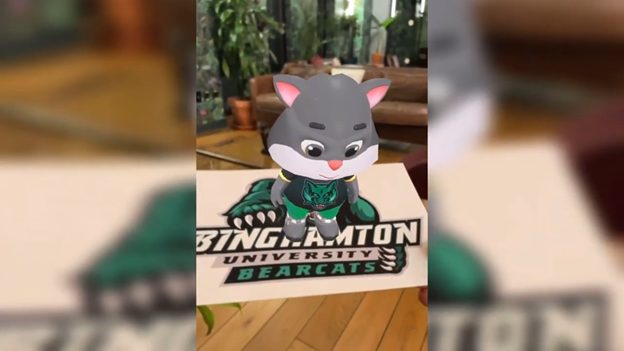
Every college junior and senior is inundated with mail from recruiting universities, all looking to make an impression. The wave of pamphlets, fliers, and postcards can be overwhelming for anyone. Adding AR activations is the perfect way to make your campus's outreach stand out amongst the crowd.
AR is easily enabled on any 2D surface through the use of a QR code, creating fun and engaging experiences on countless items schools already print: mailers, brochures, signs, business cards, swag like stickers and pins, and on-campus posters, banners, and signage. AR generates excitement beyond applications: an animation of your mascot dancing, a link to a custom Snapchat filter, or a video of your president giving a speech can turn acceptance materials into a moment worth sharing.
"The response has been jaw-dropping. SCAD is such a dynamic place, and we often say that you have to see it to believe it. What allows us to set ourselves apart is that we have a true business case to feature student work." Dave Hanak, Executive Director of Interactive Services, SCAD
Savannah College of Art and Design (SCAD) incorporated AR videos and animations into their course catalog, letting prospective students view creative sessions, play student-designed video games, tour residence halls, and chat with admissions representatives. SCAD also implemented personalized AR acceptance videos congratulating each student by name, location, and program of interest. Thanks to these AR activations, SCAD experienced a 26% increase in admissions applications, and a rise in enrollment rates since the project was first implemented.
AR-Powered Tours for Stealth Visitors
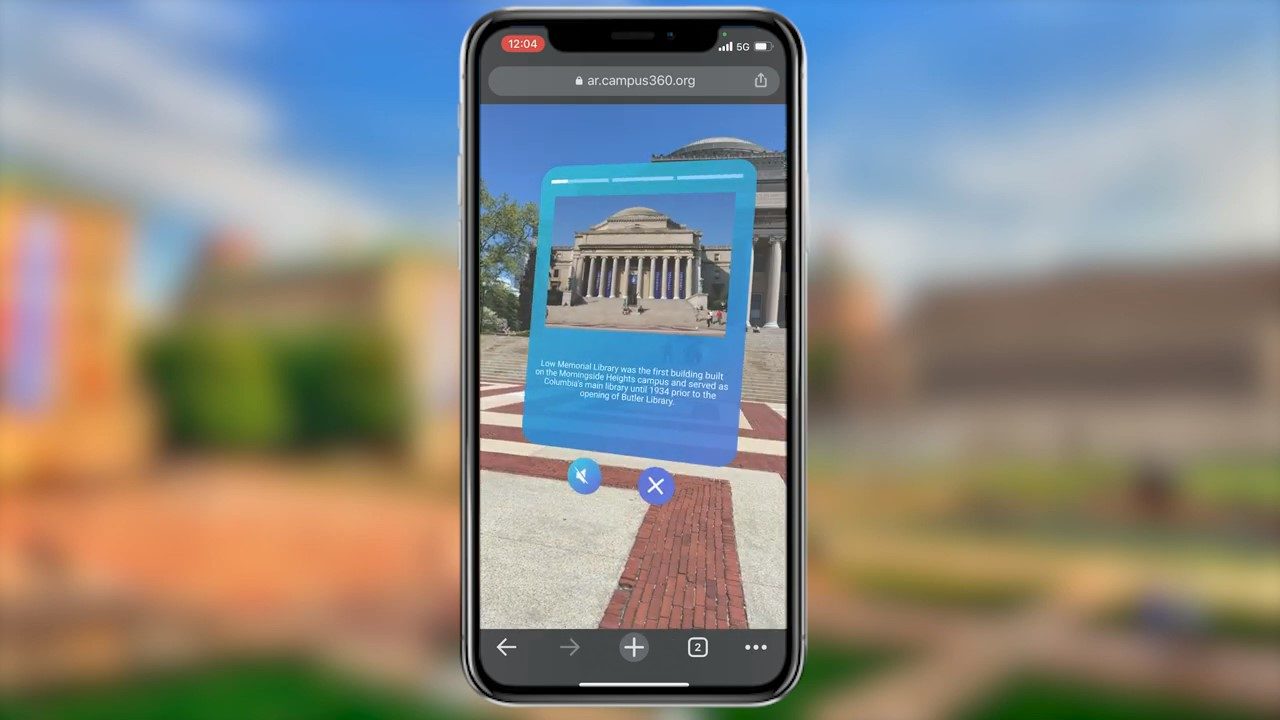
Taking AR technology a step further are AR campus tours. These can be accessed by scanning QR codes on a campus map or sign, or by using a phone's location data to identify where a student is on campus. AR tours superimpose virtual content, including informative stories, greenscreen tour guides, dynamic mascot animations, models of future buildings or current construction, and portals into 360° images of locations otherwise closed to the public, and integrate directly with Google Maps navigation, leading students seamlessly from one stop to the next.
AR tours expand your campus's accessibility, offering tours in multiple languages, letting users explore independently and at their own pace, and providing an informative experience for visitors during school breaks when student tour guides aren't available.
Browser-Based 3D Experiences
The evolving expectations of today’s digitally native students, who increasingly value immediacy, interactivity, and personalization, are prompting institutions to rethink the structure of their online presence. For prospective students, a static admissions page is no longer sufficient. They expect experiences, not just information. Browser-based 3D is an ideal solution, accessible through a standard web connection and enabling immersive experiences directly within the browser, with no app to download and no headset required. Unlike standalone apps or downloadable content, these tools use browser-native capabilities to deliver dynamic 3D environments across platforms, significantly reducing friction while expanding access.
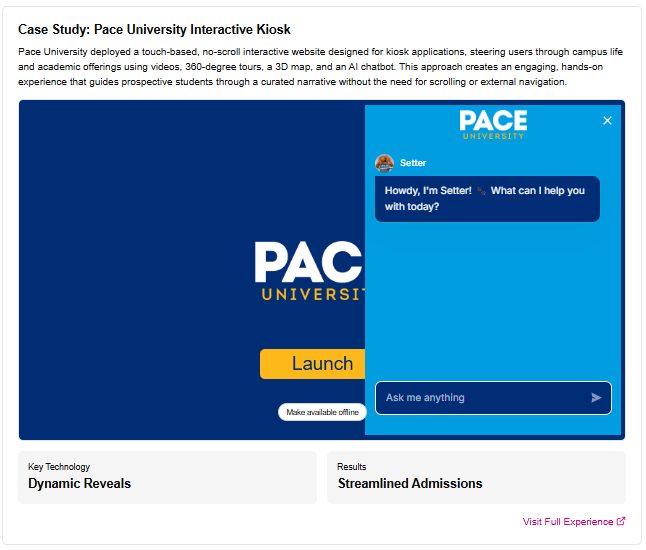
These browser-based experiences can also be deployed to create interactive, touchscreen kiosk experiences on and off campus. With a responsive touch interface, kiosks deliver the same interactive 3D content, intuitive navigation, and real-time interaction, whether deployed on a tablet at college fairs or as wall-mounted, life-size screens on campus. Kiosk experiences can be made permanently accessible, even without an internet connection, and can include informative text, images, videos, immersive 360° content, interactive 3D models, click-and-go maps, and AI-powered chatbots.
Holographic Displays
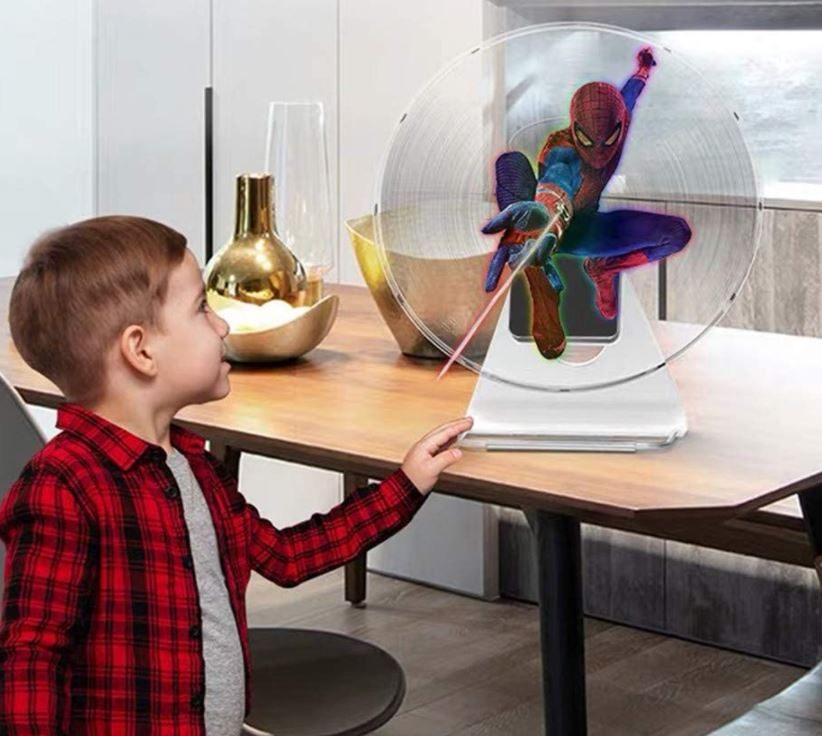
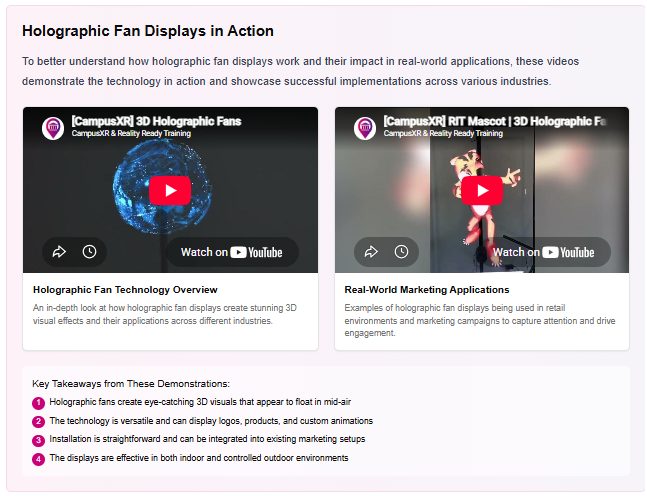
The most eye-catching form of XR is holographic displays, which allow you to show off 3D content simultaneously to a large group of people, without the need for smartphones or AR glasses. Content can easily be repurposed from AR marketing: animations of your mascot, or your university president giving a speech, displayed on a holographic screen so users see them in full 3D simply by walking by. Holographic displays are especially useful at college fairs and large-attendance events, drawing students to your booth and leaving lasting impressions.
In high-traffic venues like trade shows, malls, and transit hubs, the impact is especially pronounced. Event organizers have reported roughly a 49% jump in audience engagement when using holographic fan installations to attract crowds.
Conclusion
Given the overwhelming evidence, scientific backing, and successful precedents supporting the effectiveness of XR tools for university recruitment and enrollment, every school should actively consider how XR can enhance their unique goals. Within XR, there's a plethora of options and opportunities, and not every option is necessarily the best fit for each school. Deciding exactly how much to invest in XR, and what tools to invest in, is a larger discussion involving multiple departments: admissions and enrollment, marketing and communications, alumni relations, and tech teams.
Consider questions such as: What percentage of students come from abroad or out-of-state? Is the natural scenery or campus architecture a major attraction of the school? Does the school hold interesting stories, special traditions, or history that can be showcased? Is this a technical school, or is the school looking to highlight technology programs, facilities, or a general tech-savvy atmosphere in their marketing?
Whatever the answers to these questions, every school, no matter the size, budget, or technological proficiency, can still create a major impact with XR.
Let's build your school's XR experience
For comprehensive and professional help building out these tools, and many more student-focused XR experiences, reach out to CampusXR. We are a digital media and marketing agency dedicated to providing educational institutions with the XR experiences that bring the unique nature of your school to life.
contact@campusxr.orgAbout CampusXR
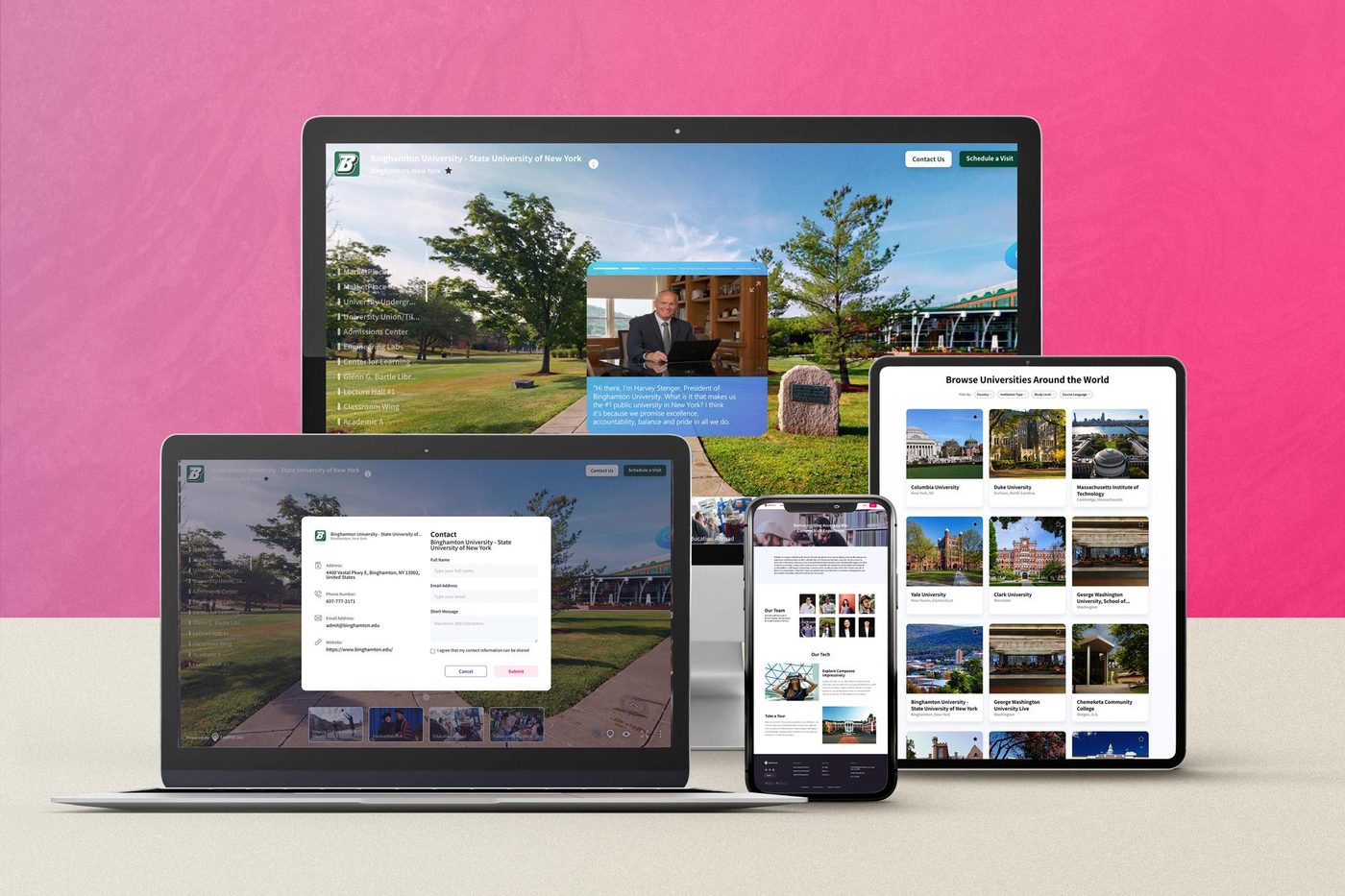
At CampusXR, we provide cutting-edge technology to captivate prospective students with XR experiences, fully customized for any university. We create high-quality virtual tours, augmented campus visits, AR marketing tools, browser-based 3D sites and kiosks, and holographic displays that truly speak to today's digitally engaged students, driving 70% deeper impressions and 4x more conversions, and transforming schools' recruitment.
As the leading VR company for universities and the only provider of AR services, CampusXR is uniquely positioned to help navigate the intersection of XR technology, educational multimedia, and international marketing. We welcome inquiries and discussion about any of the above insights, our services, or demo calls at contact@campusxr.org or www.campusxr.org.
Sources & References (26)
- influencermarketinghub.com. "8 Ways Brands Are Using Extended Reality (XR) in Marketing."
- Ung, Josie. "Layered: The Future of Augmented Reality." Mindshare UK, April 2018.
- Ibid.
- Andrew, Heather. "How Augmented Reality Affects the Brain." Zappar, May 24, 2018.
- Sung, B., et al. "Static vs. Immersive: A Neuromarketing Exploratory Study of Augmented Reality on Packaging Labels." Behavioral Sciences, 2025.
- Ibid.
- Sharp, Byron, and Jenni Romaniuk. How Brands Grow. Oxford University Press, 2016.
- Rogers, Sol. "Coronavirus Has Made WFH the New Normal. Here's How Virtual Reality Can Help." Forbes, April 2, 2020.
- "Augmented Retail: The New Consumer Reality." NielsenIQ, May 3, 2021.
- Snap Inc. and Deloitte Digital. "Snap Consumer AR Global Report 2021," 2021.
- Campaign Live (2019). "The Untapped Potential of AR Is Finally Ready for Brands."
- Francis & Hoefel. "'True Gen': Generation Z and its Implications for Companies." McKinsey & Company, November 12, 2018.
- Deloitte. "2025 Gen Z and Millennial Survey." Deloitte Global, 2025.
- "Top Generation Z Marketing Statistics." Cropink, 2026.
- "Augmented Reality Statistics By Revenue and Facts." Coolest Gadgets, 2025.
- Auxier, Brooke, and Monica Anderson. "Social Media Use in 2021." Pew Research Center, January 31, 2022.
- "The Power of Virtual Tours in Student Recruitment." ICEF Monitor, May 11, 2021.
- Soriano, Jeff. "Why Virtual Walking Tours Are a Win-Win for Colleges and Students." YouVisit, Aug. 18, 2016.
- Ravipati, Sri. "Scaling Up Admissions and Recruiting with AR." Campus Technology, April 4, 2017.
- Bengfort, Jacquelyn. "College Recruiting Goes Virtual with Immersive Technology." EdTech Magazine, October 25, 2017.
- Ibid.
- Global Growth Insights Report. "3D Hologram Fans Market Forecast 2033."
- Shopper Experience Survey, 2024. Retail Dive.
- Eye Tracking Study on In-Store Signage, Journal of Retail Tech, 2022.
- U.S. Experiential Events Benchmark Report, 2023. Event Marketer.
- Bloomberg. "Microsoft $22 Billion U.S. Army Deal for HoloLens Advances." April 1, 2021.